
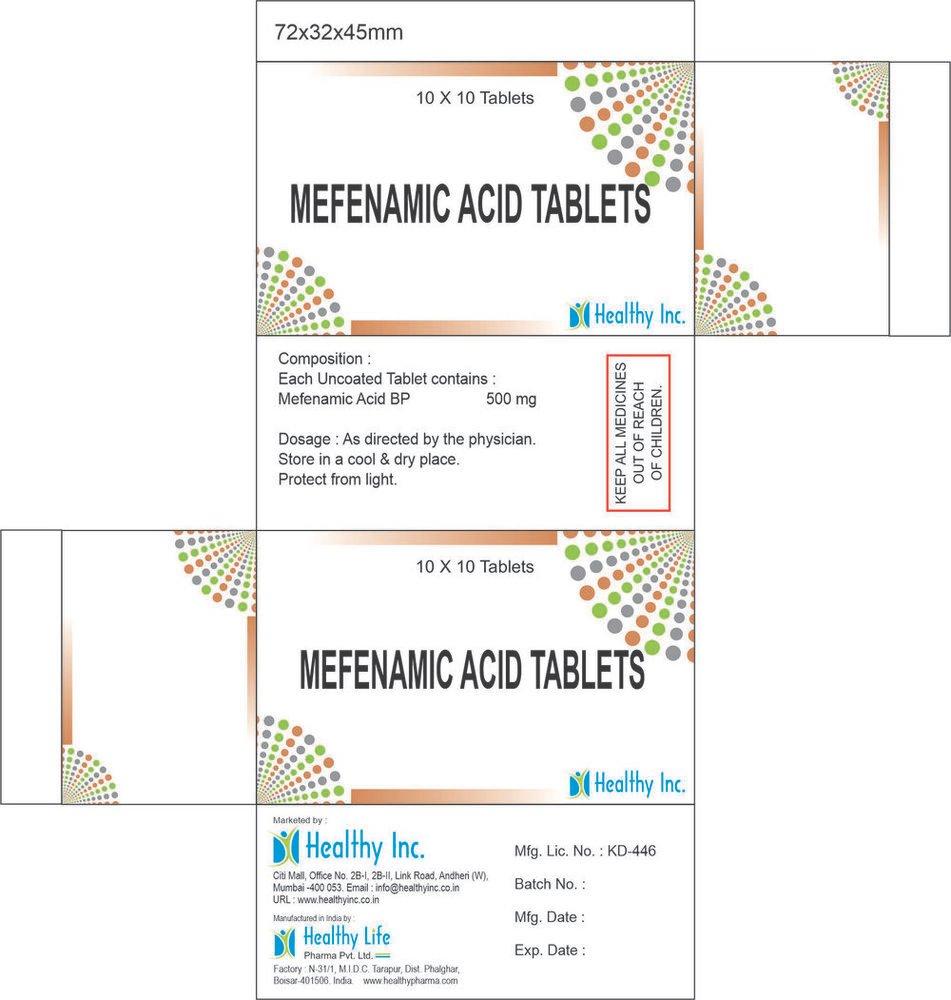
Composition: Mefenamic Acid IP 500 mg / Mefenamic Acid BP 500 mg (separate variants)
Dosage Form: Uncoated tablet
Usage: Short-term relief of mild to moderate pain, including menstrual cramps
Category: Analgesic / Anti-inflammatory Drugs
Therapeutic category: NSAID, Analgesic, Anti-inflammatory
SKU: Mefenamic Acid Tablets
Categories: Pharmaceutical Exporter India, Pharmaceutical Formulations India, WHO GMP Certified Formulations
Mefenamic Acid Tablets IP/ BP is listed in our pharmaceutical product portfolio for business-to-business enquiries. Product-specific formulation details, available strengths, dosage form, pack configuration and supply terms should be confirmed against the current product specification before ordering.
For distributor, wholesaler, hospital procurement and export enquiries, please request the applicable product specifications, batch documentation, shelf-life information, packaging options and regulatory documents. Availability and documentation depend on the product and destination market.
Manufacturer: Healthy Life Pharma Pvt. Ltd. (certification subject to verification)
Exporter: Healthy Inc (export credentials subject to verification)
Mefenamic Acid Tablets IP / BP 500 mg are uncoated oral tablets containing mefenamic acid, a fenamate-class nonsteroidal anti-inflammatory drug (NSAID). Mefenamic acid is used for short-term relief of mild to moderate pain and primary dysmenorrhea (menstrual cramps), where authorized by the local product label.
Healthy Life Pharma Pvt. Ltd. is identified as the manufacturer and Healthy Inc as the exporter in the supplied product information. Contract manufacturing, destination-market availability and quality certifications should be confirmed against current documents.
| Product Name | Mefenamic Acid Tablets |
|---|---|
| Active Ingredient | Mefenamic Acid 500 mg per tablet |
| Pharmacopoeial Variants | IP 500 mg; BP 500 mg (separate labelled variants) |
| Dosage Form | Uncoated tablet |
| CAS Number | 61-68-7 |
| Therapeutic Class | NSAID / Analgesic / Anti-inflammatory |
| Use | Short-term management of mild to moderate pain and menstrual pain, subject to local approval |
| Other Strengths | 250 mg is mentioned in background text but not confirmed in supplied product compositions |
| Shelf Life / Packaging | Confirm against approved product specification and stability data |
Tablet manufacturing must control powder flow, blend uniformity, compression quality, disintegration and dissolution. Appropriate validated granulation or direct-compression processes may be selected based on the formulation. The supplied products are uncoated; film coating should not be claimed for these variants.
Specific manufacturing methods, excipients and site capabilities require confirmation from approved batch records and technical documentation.
Quality controls for mefenamic acid tablets may include identity, assay, content uniformity, dissolution, related substances, microbial quality where applicable, and packaging integrity, using the approved pharmacopoeial monograph and registered specification.
Numerical dissolution limits, assay acceptance criteria, 36-month shelf life, WHO-GMP status and export certificates should not be presented as verified without current supporting records.
Mefenamic acid inhibits cyclooxygenase-mediated prostaglandin synthesis, helping reduce pain and inflammation. Its established clinical uses include short-term pain relief and primary dysmenorrhea. Some jurisdictions also authorize use for heavy menstrual bleeding; this indication must match the destination-market label.
It is not established as uniquely superior to ibuprofen or other NSAIDs, and an uncoated or film-coated dosage form does not eliminate gastrointestinal ulcer or bleeding risk.
Prospective importers can request confirmation of current manufacturing authorization, applicable GMP certification, product registration status, certificates of analysis, stability data and available CTD/ACTD dossiers. Documentation, market access, packaging configurations and shipping terms depend on the destination country and the specific product.
Q: What strengths are listed?
A: The supplied labels identify 500 mg tablets under IP and BP standards. The 250 mg strength mentioned in descriptive material needs separate confirmation.
Q: Is this an antibiotic?
A: No. It is an NSAID used for pain and inflammation, not to treat bacterial infections.
Q: Can it be taken with other painkillers?
A: Avoid combining it with other NSAIDs such as ibuprofen or naproxen unless specifically directed by a clinician.
Q: Is it suitable for stomach ulcers?
A: It can cause serious gastrointestinal bleeding or ulcers and is generally unsuitable for patients with active peptic ulcer disease or previous NSAID-related bleeding.
Use only according to the approved local prescribing information and a qualified clinician’s instructions. Dosage and maximum duration vary by indication and jurisdiction. Mefenamic acid is generally intended for short-term use at the lowest effective dose for the shortest necessary duration.
Take as directed, commonly with food if recommended by the product label. The supplied 500 mg tablets must not be substituted for a 250 mg dose without prescriber or pharmacist advice.
Seek urgent care for black stools, vomiting blood, chest pain, severe allergic symptoms or markedly reduced urine output.
Store according to the approved product label, protected from excessive heat and moisture, in the original packaging. Keep out of reach of children. The suggested below-30°C condition requires confirmation for the specific IP/BP product and packaging.