
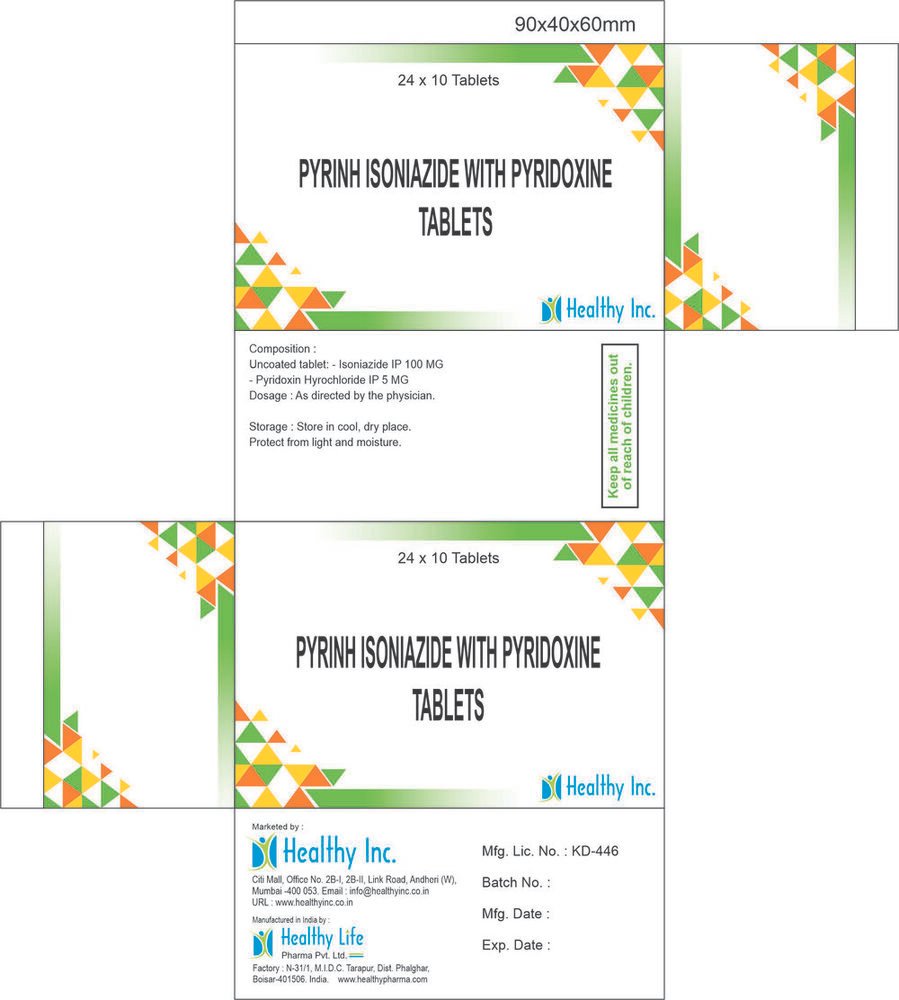
Composition described: Isoniazid 300 mg + Pyridoxine Hydrochloride 10 mg / 25 mg / 50 mg (strengths require verification).
Usage: Tuberculosis treatment regimens and prevention of isoniazid-associated vitamin B6 deficiency, as prescribed.
Category: Anti-Tuberculosis Drugs
Therapeutic category: Antitubercular / Vitamin B6 Supplement
SKU: Isoniazid Pyridoxine Hydrochloride Tablets
Categories: Tablets Manufacturer
Isoniazid & Pyridoxine Hydrochloride Tablets is listed in our pharmaceutical product portfolio for business-to-business enquiries. Product-specific formulation details, available strengths, dosage form, pack configuration and supply terms should be confirmed against the current product specification before ordering.
For distributor, wholesaler, hospital procurement and export enquiries, please request the applicable product specifications, batch documentation, shelf-life information, packaging options and regulatory documents. Availability and documentation depend on the product and destination market.
Isoniazid & Pyridoxine Hydrochloride Tablets combine an anti-tuberculosis medicine with vitamin B6. Isoniazid acts against Mycobacterium tuberculosis; pyridoxine reduces the risk of isoniazid-associated peripheral neuropathy. Active tuberculosis requires an appropriate multidrug regimen and clinical monitoring; this combination must not be presented as complete standalone treatment.
Manufactured by: Healthy Life Pharma Pvt. Ltd. (WHO-GMP status as provided; confirm certificate)
Exported by: Healthy Inc (Star Export House status as provided; confirm documentation)
| Parameter | Specification |
|---|---|
| Product | Isoniazid & Pyridoxine Hydrochloride Tablets |
| Proposed composition | Isoniazid 300 mg + Pyridoxine HCl 10 mg, 25 mg or 50 mg — individual strengths require confirmation from approved formula and artwork |
| Other variant in original website archive | Isoniazid 100 mg + Pyridoxine HCl 5 mg, referenced in archived copy; verify separately |
| CAS (isoniazid) | 54-85-3 |
| Dosage form | Oral tablet; coating and scoring to be verified |
| Therapeutic class | Antitubercular agent + vitamin B6 |
| Packaging, shelf life and compendial standards | Confirm using batch documents, approved specifications and market registration |
Formulation development should assess blending uniformity, compatibility of isoniazid and pyridoxine, moisture and light sensitivity, disintegration, dissolution and packaging suitability. Specific manufacturing equipment, coating methods and process claims must be confirmed against actual batch records and validation documentation.
Appropriate quality controls may include identification and assay of both active ingredients, dosage-unit uniformity, dissolution, related substances including relevant hydrazine impurities, and stability testing. Exact acceptance limits depend on the applicable registered specification; blanket 90–110% claims should not replace validated release criteria.
Isoniazid inhibits mycolic-acid synthesis in susceptible mycobacteria. Pyridoxine supplementation helps prevent peripheral neuropathy, particularly in patients at higher risk, but does not eliminate all neurologic adverse effects. Isoniazid is used in selected active-TB regimens with other drugs and in appropriate tuberculosis preventive-treatment regimens under national guidelines. The regimen, duration and resistance considerations require clinician oversight.
For institutional procurement or export, request product-specific dossiers, certificates of analysis, approved labels, stability data and applicable manufacturing certificates. Availability of CTD/ACTD documentation, COPP, free-sale certificates and tender eligibility must be confirmed for the specific product and destination market.
Q: Why combine isoniazid with vitamin B6?
A: Pyridoxine helps reduce the risk of isoniazid-associated peripheral neuropathy.
Q: Is this tablet enough to treat active TB?
A: No. Active TB generally requires a prescribed combination of antitubercular medicines to avoid treatment failure and resistance.
Q: Is liver monitoring important?
A: Yes. Isoniazid may cause serious liver injury; clinicians assess symptoms, risk factors and the need for laboratory monitoring.
Q: Are all listed strengths confirmed?
A: Not yet. Verify each composition and label against approved product documents.
Use only under a tuberculosis clinician or national TB-program protocol. The appropriate isoniazid and pyridoxine doses depend on indication, age, weight, comorbidities, interactions and the approved formulation. Do not use the illustrative 300 mg combinations as a universal dose, and do not interrupt a prescribed TB regimen without medical advice. Administration with or without food should follow the approved product label and clinician instructions.
Store in the original, well-closed packaging, protected from excess heat, light and moisture, according to the approved pack label. The proposed below-25°C condition and 36-month shelf life require product-specific stability confirmation. Keep out of reach of children.